

Positively Telling Yourself the Truth

A few years ago, something was taken from me that I loved. I have suffered with digestive issues for much of my adult life, on and off. If I experience much stress, apparently my weak point is my stomach. Anyway, I began to suffer an extra measure of pain, nausea, and other unpleasant symptoms that led me to investigate the source. At that time, I really enjoyed having a glass of milk, particularly before bed at night. However, this came to a stop once I realized that milk was the culprit behind my issues. My stomach no longer responded well to it.

Fast forward to a couple of weekends ago. I decided to give milk a try. This was not the first time I decided to see if it still bothered me. I really miss it and keep hoping that one day my body will respond well to it again. However, this was not the case. I slept about 2 hours that night due to those same old symptoms that I had experienced a few years ago.

All the positive thinking in the world cannot overpower what is true.

I told myself it would be different this time, but it wasn’t. I wished I could drink milk again without my body rejecting it, but it still did. All the positive thinking in the world couldn’t have made my body change its response to milk. Yeah, I could “push through” and drink it anyway. However, that would not be worth it. What little joy I might would get in drinking it would be washed away 45-60 minutes later when my stomach started churning.

The truth is, if our perspective and thoughts are not based on truth, positive thinking does not change anything long-term. It may make us feel good in the moment, but there will be a moment of reckoning when reality hits.

So what are we to do? Are we to just mope around in pessimism, always expecting the worst? Without positive thinking, isn’t that all that’s left? NO, thankfully there’s something else…something much more substantial and reliable.

We can rely on truth.

Truth is the one thing we can focus on that will not let us down. It is what it is, and it does not change. Sometimes it stings when we are confronted with it, but it helps us to embrace reality. It encourages us to live our lives freely as who we really are. It also helps us avoid some phony happy-go-lucky perspective that is no more than a bold faced lie that will eventually leave us feeling anxious and frustrated (and possibly with a sour stomach).

It’s often difficult to want the truth and to see it in our everyday lives. The challenge is for us to love and seek truth rather than settling for the phony stuff that is tempting to fall for. We must trust that truth is more trustworthy than our feelings at times. Truth is more valuable and pays more dividends than telling ourselves what we want to hear.

Truth is more than just something to learn about and apply in our lives.

God is the source of truth. Only in Him can we embrace it and live it out. Jesus referred to himself as “the Truth”. Since He personalized “truth”, it is not just a cold theological term, rule to follow, or task to complete. Truth is relational. It is something we discover, learn, and cultivate in our lives with God and others. Truth is comforting, a place to rest, someone we can depend on, and it frees us to be who we really are. It reveals our true identity (who God says we are). Trusting in the truth leads us to see ourselves, others, God, and the world around us with a whole new, colorful perspective. If positive thinking was an old black and white television, truth is a brand new 75 inch HD OLED television with HDR (for those of you who are not tech-savvy, that is a really nice television).

Two weekends ago, I found out that milk still bothers me. However, the truth is there are many things in this world I thoroughly enjoy. Some of them have yet to be discovered. I don’t need milk to be happy. I will miss it, but I will look forward to other things in my life that will likely prove to be more beneficial and satisfying. Tossing milk to the side is hard for me, but it is a small thing in comparison to what some of us are facing. I pray we are able to embrace Him, His Truth, and His love in the midst of whatever situation we are in. Instead of merely telling ourselves something positive, let’s positively tell ourselves the truth.

-Neil

If you would like to receive notifications when we post new blogs or events please subscribe to our email list using the form below. Add us to your address book to make sure we do not end up in your spam folder.



 

Transforming Our Weaknesses into Strengths

Paul wrote many letters that we can now read in our Bibles, each containing great insight into his life and the lives of those he wrote to. He is a dramatic example of how one can truly be changed by God’s grace through trusting Christ. I recently had a conversation with some friends about Paul and wanted to share some about what came up, as I realized how impactful it can be to take a close look at Paul “before and after” his encounter with Jesus. Some things about Paul changed, but some things did not.

From the first time we read about Paul in the Bible, we begin to see a driven man. He was passionate about what he believed in. He was extremely knowledgeable of Scripture and the Law. Having his own understanding of what he knew about those things, he strived to keep the law and enforce it with others. He felt strongly that he was doing the right thing. Nothing could stop him. He was even complicit in murder in attempts to protect what he believed in, which included the murder and imprisonment of those who trusted in Jesus.

Unbeknownst to him, he was persecuting not only those who trusted Christ, but also Christ the Lord Himself. Jesus made him aware of this while Paul was traveling to Damascus to continue his threats and carrying out of what he perceived to be justice. After being blinded and then regaining his sight, Paul’s heart was changed by God and his perspective changed as well.

This is where it gets rather interesting. Yes, Paul’s treatment of others, particularly Christians, changed. However, his temperament did not change. He was still a very driven man. He was still very passionate in what he believed in. He was still determined to push through anything and anyone to accomplish the goals set forth before him. However, all of this looked a lot different with the new heart he had.

God transformed Paul’s weaknesses into strengths.

Instead of hatred and self-righteousness driving him, love and humility had taken over in his heart. Instead of making others suffer to prove his own point, he was now willing to suffer himself in order to accomplish the goal of spreading the truth about Jesus (the Gospel). Instead of being willing to take the lives of others, he was determined to give others life in Christ.

For where your treasure is, there your heart will be also. (Matthew 6:21, ESV)

Paul initially treasured the seeking of righteousness through adherence to the rules he interpreted from Scripture. He believed in striving to follow the rules and enforcing them on others. After coming to know the Lord, he then treasured God’s grace due to his newfound realization that he was in desperate need of it. Paul once thought he was good because he worked so hard to be. After his conversion, Paul realized his deep need for dependence on Christ for God to work good in and through him. Paul was once arrogant and feared by others, but he became humble, loving, and loved.

God transforms our weaknesses into strengths.

Many of us see things in ourselves that we do not like, things we might even hate and wish to be changed. However, today I want to encourage us to be open to seeing ourselves from a different perspective. Perhaps those very things that we hate about ourselves are merely us acting out in ways that God doesn’t intend for us. Maybe we are hard-headed, refusing to be open to being wrong, and that causes us trouble. However, with a bit of humility, that same hard-headedness can be steadfastness and determination to seek and stand by truth and trustworthiness, which can keep us OUT of trouble. Perhaps we procrastinate often, but with the right motivation we might discover that we have a knack for avoiding quick, disorganized choices and instead have the ability to engage in well-thought-out decisions that helps us and those around us.

Instead of treasuring God and who He created us to be, we often treasure what we see in others and desire to morph into something else. Let’s make a concerted effort to do something different. Let’s look in the mirror and notice those things we wish were different. Invite God and trusted others to take a look at those same traits and tell us what they see. Perhaps those traits and tendencies don’t need to be removed. Instead, maybe we need a different perspective in order to take advantage of strengths we have been considering to be weaknesses.

-Neil

If you would like to receive notifications when we post new blogs or events please subscribe to our email list using the form below. Add us to your address book to make sure we do not end up in your spam folder.



Fitting In Verses Belonging

Think back to your first day of high school.  The night before you are full of emotions.  You are excited but there’s a layer of fear that you just can’t shake.  You call your friends up to see what they are wearing for the big day.  You wished you had asked that just out of curiosity and part of general conversation but the question had different roots.  Would you fit in?   All of a sudden, the outfit you had picked out for this big day became lame.  Now you are doubting.  I am going to look like a dork?  Sally is going to look so much better than me.  If only my mom had let me buy that more expensive top!

You could hardly sleep.  You’ve waited for this time in your life and now it’s finally here.  Then the excitement started to be eaten away.  Fear and doubt started to take over.  The unknown became the reason you couldn’t sleep now!  Will people like me?  Will they laugh at my clothes?  My braces make me look hideous!  And of course a large zit has popped out.  The end of my nose is now large and shiny, like Rudolph.  Everyone will definitely see me coming!  That’s not exactly the grand entrance I had planned to make!

We all know the feelings and awkwardness that goes along with trying to fit in, right?  You know, doing whatever it takes, wearing whatever it takes and even talking a certain way to make sure we’re “included”.  I wish I could say that fitting in was just something we did when we were teenagers but I would be lying to myself.  We spend a lot of time doing this throughout our lives.  If we didn’t then there wouldn’t be a market for trendy clothing, haircuts, and diets!

More goes on inside of us than simply getting someone to like us when we are trying to fit in.  Comparison, hiding and losing sight of who we are can take over. 

“But when they measure themselves by one another and compare themselves with one another, they are without understanding.” 2 Corinthians 10:12b.

Fitting in says we have to be like them.  We have to do what they want.  We have to keep our needs and desires quiet.  Fitting in means I look at myself only through a lens of comparison to others.  Where do I stand according to their requirements?  Do I have what it takes?  Am I pretty enough?  Thin enough?  Smart enough?  Funny enough?  The list can go on and on.  I compare me to them.  Comparison feeds the lie that I am not enough and probably never will be.  Comparison says that I must work harder.

Comparison leads to not understanding who we truly are.

Fitting in keeps you from knowing who you are.  We are constantly trying to be what someone else wants of us (even if we don’t know what that is or are just assuming we know).  As long as we are doing that we will hide who we truly are.  We will lose sight of the person God made us to be.  We will forget our own beauty and uniqueness.  We will think the real me is just dumb and unlikeable.

The more we try to act like another, the less we can be ourselves. 

 Embracing who we are because of God’s love and grace gives us freedom to belong instead of fitting in.  Belonging is different than fitting in.  Belonging says, “I love and accept you.”  Belonging is such a gift and it doesn’t require us to change.  It allows us to be who we are and to be loved for it.  Belonging leads to true friendship and relationships.  Love and grace bloom there.

I encourage you to think about your relationships.  Where are you belonging vs fitting in?  Do you see the difference in your posture when you’re around those different relationships?  Have you experienced the true freedom of belonging?  It can begin with your relationship with Jesus.  He is not asking us to fit in with Him.  He’s not asking us to change.  He loves you no matter what you are wearing, no matter what size you are and no matter how smart you are.  Sometimes that’s hard to believe and understand, I know, but it is so true.

I would love to hear your thoughts on belonging vs fitting in.  Feel free to leave a comment and we can discuss this further.

-Melissa

If you would like to receive notifications when we post new blogs or events please subscribe to our email list using the form below. Add us to your address book to make sure we do not end up in your spam folder.



Living Small and Curious

What do the words small and curious mean to you? These two words can mean different things.  Recently I have read several different things where those words popped up. Small and curious.  These two words have stuck with me.

At times we tend to focus on trying to make everything big, planned and figured out.  Unfortunately during this we miss a lot.  Life’s journey is full of beautiful and intricate details.  When we stay large and uninterested we easily miss it.  When I try to go straight to the end result, I tend to miss the beauty along the way.

Being small and curious still leads me but it allows me to live and love along the way.  Let’s start with the word small.  I’m not referring to size, stature, belittled or cowering.  Instead, small here is referring to my place.  When I’m small, I’m looking up.  I’m seeing life around me. I’m seeing others.  I’m seeing God.  Imagine looking under a quilt or something cross stitched.  The finished result on top is a piece of art but underneath shows all the steps and detail that went into it.  Being small is living and seeing experiences from underneath.

What about curious?  I’m not referring to being nosey.  Instead, curious means I’m being open.  I am no longer just seeing an end result or a plan.  I actually see others and their experiences.  I can see how things work together.  My eyes are open. My heart is open.  I enter into daily life with a sense of curiosity instead of through a rigid agenda or preconceived notion about the person or thing I’m encountering.

Being small and curious brings freedom.  It’ s a freedom for me and a freedom for those around me.  With a small and curious posture I listen to others and ask questions out of love.  I let others talk.  I don’t take things personal.  This freedom also allows me to be okay with not having the answers.  I don’t fix.

I stay small and listen.  I stay curious and love.  Grace abounds.    

Job 12:7-12 The Message (MSG)

“But ask the animals what they think—let them teach you;
let the birds tell you what’s going on.
Put your ear to the earth—learn the basics.
Listen—the fish in the ocean will tell you their stories.
Isn’t it clear that they all know and agree
that God is sovereign, that he holds all things in his hand—
Every living soul, yes,
every breathing creature?
Isn’t this all just common sense,
as common as the sense of taste?
Do you think the elderly have a corner on wisdom,
that you have to grow old before you understand life?”

-Melissa

If you would like to receive notifications when we post new blogs or events please subscribe to our email list using the form below. Add us to your address book to make sure we do not end up in your spam folder.



All Apologies

The other day at work, I was not in a good mood. Often, when my mood is in the dumps, I spew sarcasm. Sometimes, others laugh at my responses to annoyances around me. However, many times these comments can be hurtful. In this particular case, after I had made one of my notorious comments, I pondered how it might have seemed to those around me. A few nights before, my loving and concerned wife let me know how I was affecting her. My frustration with some things in life was leading me to respond with sarcasm and vent sessions. Since Melissa has a desire to see me happy and content, she said it led her to feel like she needed to tip-toe around me. That’s the last thing I wanted! This really bothered me. I apologized to her and we discussed what was going on to lead to my demeanor. Fast-forward to my situation at work. Thankfully, that interaction with Melissa caused me to be more aware of how I was behaving around my coworkers. After realizing that some of my comments might have been hurtful, I went to those who heard my remarks, apologized, and explained that my frustrations were my issue and in no way were indicative of how I felt about them. However, I did not want to continue making them uncomfortable around me. I don’t want my friends to feel like they must walk on eggshells! 

How often do we apologize?  

It’s an important question to ask ourselves. If we cannot remember the last time we apologized for something, then there’s a problem. We are imperfect people who intentionally and unintentionally hurt each other all the time. If we aren’t apologizing, we are missing something and creating barriers in our relationships with others. We’ve all done things that we need to apologize for in recent history. We shouldn’t have to look too far in the past to find a transgression. 

Some of us over-apologize.

If we’ve apologized to 15 different people in the last 15 minutes, then that very well may be a problem, too. We cannot be responsible for everything that goes wrong! Some of us feel tremendous guilt almost constantly. We begin to apologize for things almost out of habit, saying we’re sorry just because someone else is inconvenienced when we had no control over it at all. It’s important to own our mistakes, but it is also important not to take the blame for things that are not ours to own.  

Sincere and heartfelt apologies are a door to a wonderful gift from God.

Simply put, there can be too much or too little of this very important behavior. Apologizing isn’t just a behavior, though. When it’s done the way God intended it, then it is a heart-driven act that is born out of acknowledgment that we have done something wrong and that we have hurt someone. Authentic apologies are an attempt to tap into one of God’s wonderful and miraculous gifts of grace: forgiveness.  

Forgiveness is essential to receive and to be offered to others.

Forgiveness sets us free from the bondage of guilt. It prevents guilt from morphing into shame, which is much akin to a crippling disease of the soul. Forgiveness can lead to reconciliation and restoring damaged relationships. It can initiate the healing of deep wounds. It’s just too important of a gift to miss out on. 

We need to be aware of a false approach to forgiveness through apologies.

There are ways in which we can say we are sorry, but not pursue the forgiveness we need. In 2 Corinthians 10:7, Paul refers to this imposter as “worldly grief (sorrow)”. Here are some clues that we may be engaging in worldly sorrow and not acting out of repentance and seeking true forgiveness:  

We are only looking to get ourselves off the hook for something.      

Deep inside, we are looking for the other person to respond in a certain way. Maybe we want them to apologize for something, too. 

We demand that we be forgiven because “God says you should forgive me”. 

We have no desire to spend ample time trying to understand the hurt we have caused. 

We minimize the sin we have committed, or deny it is a sin at all. We refuse to own the entirety of what we have done. This delegitimizes the hurt we’ve caused. 

There is a wonderful question that we need to be asking those around us: “How am I affecting you?”

So, let’s be careful to examine our hearts for occasions in which we need to seek and offer forgiveness. Let’s make it a habit of asking those around us how we are affecting them. There will be times in which we find that we are not at fault. Many times, we will find that we are. Let’s start the process by talking to God first. Receiving the reality of His forgiveness is absolutely necessary as a foundation to seeking it from others. We must be firmly wrapped up in His love in order to fully own the depths of our wrongdoings. Without experiencing his unconditional love in the midst of our guilt, we will find it impossible to humble ourselves with those we have hurt.

-Neil

If you would like to receive notifications when we post new blogs or events please subscribe to our email list using the form below. Add us to your address book to make sure we do not end up in your spam folder.



Who Am I?

Sometimes I feel lost and don’t even know who I am. I catch myself trying to be like this successful person, that great writer or that great coach. Sometimes I don’t understand why I act the way I do or why God gave me certain traits. Why did I respond that way? Why can’t I just make a decision? Why did I get so angry? I also ask these same questions in my relationship with Neil. Why is he acting like that. Why didn’t he do this instead of that? Why does he want that?

If you’re like me and find yourself questioning who you or someone else is then I encourage you to read this old post that describes temperament. This tool has made a tremendous difference in my life and I am constantly going back to it to help me understand who I am.

We would love to provide this service to you and walk with you as you discover who God made you to be and how this looks in your everyday life. Feel free to reach out with any questions -Melissa
——————————————————————————————————————————————–

All About Temperament

With the launch of our website, one of our hopes is to provide more information about what kind of services we offer. One of the tools we have been using for years now is something called the “Arno Profile System”, which is a particular kind of “Temperament Testing”. Here’s a short rundown on this optional, but valuable tool.

What is a “temperament”?
An easy way to view “temperament” is to envision it as describing a person’s needs, traits, strengths, and weaknesses. One cool thing about knowing your temperament is it will never change. We were born with a certain temperament, by God’s design, so no temperament is a “bad temperament”. Although temperament is not learned and never changes, life experiences can cause one to act out differently than someone with the same temperament. And, of course, the output of our temperament is vastly different when we are acting in sin versus walking by faith. The assessment is only one way of trying to identify and understand the intricacies of God’s workmanship in us, but we have found it very particularly accurate and enlightening for those we have shared it with.

Where did we get this “temperament” stuff and why do we use it?
A large part of our studies revolved around the “Arno Profile System” and being licensed to administer it. Dr. Richard Arno and Dr. Phyllis Arno developed this assessment to help Christian Counselors help others. We can be skeptical when we run across any counseling tool, and this assessment was no different. However, after administering it to a large number of family, friends, and clients, we have found it to be exceptionally helpful. We believe strongly in helping people identify “heart issues” and dealing with those, rather than simply teaching people how to work harder to behave better. The results of temperament assessment helps us and those we work with move towards that goal.

What have our past clients had to say about this?
Here are a few examples of the repeated feedback we have received from those who have completed the assessment and reviewed the results with me:
1) Better understanding of self, along with increased awareness of personal strengths and weaknesses
2) Better understanding of others (wife, child, parent, etc.)
3) Realization of the true cause of the issue with which the person has been struggling
4) Spurring of real, deep conversations between couples planning to marry or having been married for years
5) The realization that some personal tendencies, previously identified as flaws, are actually just misuses of wonderful gifts (traits) God has created in us
6) Learned about the true source of their tendencies, and found themselves learning how to turn “weaknesses” into a “strengths”

How much does this assessment cost?
At present, there is a charge for temperament testing. Please contact us for pricing, as it varies, depending on the situation. For group testing, we will make adjustments based on the number being tested. We do require at least one counseling session to present and explain the results. From our experience, we have seen that most people want more than one session for discussion.

How do I sign up for temperament testing?
Please click here if you think you may be interested in temperament testing for yourself, you and your spouse, pre-marital counseling, your small group at church, your family, or some other setting you might have in mind.

-Neil & Melissa

If you would like to receive notifications when we post new blogs or events please subscribe to our email list using the form below. Add us to your address book to make sure we do not end up in your spam folder.



All the Right Answers

One of the biggest stressors I encountered when I first started counseling was feeling pressure to have answers for people. Clients would come in with problems, often major ones, and tell me their story. Sometimes I had difficulty even listening to them well because I was constantly trying to think of what I should say.

Feeling the pressure to have answers is common among many of us.

While we all are not counselors, I do think many of us share this struggle. We all encounter others hurting, in need, lost, and broken. I believe many of us that are Christians feel even more pressure to have all the right answers. This is unfortunate because it places undue pressure on us. God does not want us to carry such burdens.

Having answers is not our job and ultimately it is not what we need.

It took several experiences for God to teach me that it’s okay not to have answers, and I still fail to trust Him in that sometimes. The realization that I could not fix anyone or the problems they were encountering was difficult to swallow. Isn’t that what a counselor is supposed to do? Isn’t that what Christians are supposed to do? Well…..NO, it’s not.

We may need to be reminded of this: we are not God. We do not have all the answers. He does, but we do not. He has the power to heal, meet needs, draw people home, and restore relationships. We can certainly be a part of that process when we are invited into it, but we are not in charge of it, and we are not responsible for having all the answers and abilities to fix what ails ourselves and those around us.

Trust gives us access to what we truly need, for ourselves and to offer others.

We tap into this healing, restorative, and calming Grace that God offers us by trusting Him. We can trust Him not just to become involved in our lives and those around us, but trust that He ARLEADY is involved. We can trust Him to show us what He is up to, or better yet show us what it looks like for us to be who He created us to be in those circumstances.

Loving others doesn’t require answers.

Love doesn’t demand that we bear the burden of having to fix anything or anyone. Many times loving others well means less talk and more offering them our time and listening well. Regardless of what it looks like, being lovers is exactly what He invites us to do. He does that because that is who He has made us to be. Live loved…receive the love He has for us, bask in it as often as we can, and allow that love to empower us to share it with others. Let His grace and love be a reminder to take a deep breath before speaking or reacting when presented with life’s problems, whether it be our own or someone else’s.

“God, you’ve got this. We trust You. You love us, you are holding us tightly, and you are not going to let go. May we rest in Your love, and share it with each other…even more so when we are hurting. Father, may we not seek cheap solutions, self-help books, psychological parlor tricks, and temporary answers to life’s biggest hurdles. Instead, may we be blessed with a calmness and patience that only You can bestow in us, so that we may desire to receive what we need from You exactly when we need it.”

-Neil

If you would like to receive notifications when we post new blogs or events please subscribe to our email list using the form below. Add us to your address book to make sure we do not end up in your spam folder.
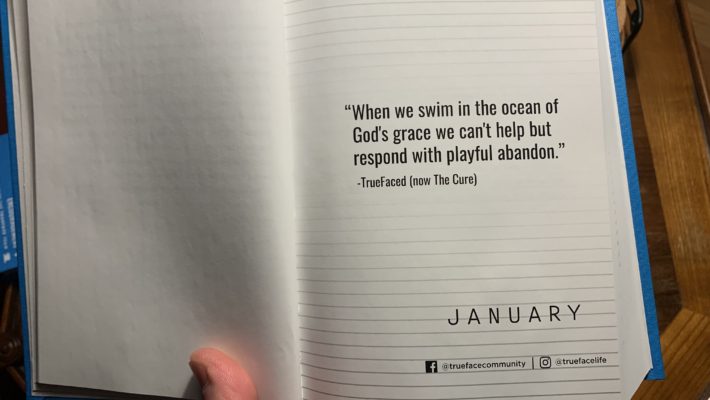


Some of our Favorite Grace-Themed Resources

We have some favorite go-to books & videos that go back to time and time again.  We need to be reminded of truth and how grace is in our everyday lives.  These resources provide that and we wanted to share these jewels with you as well.  Below are some of our favorites.  They are in no particular order and this is not an all-inclusive list (I had to stop somewhere!).

Click on the links below to find out more about each book, movie or video.

Panic to Peace: Living Free from the Grip of Fearby Neil McLamb

On My Worst Day by John Lynch

Bo’s Café by John Lynch, Bruce McNicol, and Bill Thrall

 Grace for the Good Girl by Emily P. Freeman

 He Loves Me by Wayne Jacobsen

 The Cure by John Lynch, Bruce McNicol and Bill Thrall

 The Cure & Parents by John Lynch, Bruce McNicol and Bill Thrall

Breaking the Hex by The Fields Brothers

Two Roads Message by John Lynch

The Heart of Man Movie (you can also watch this on Netflix or purchase from Amazon video or iTunes)

We would love to hear your thoughts on these resources as well. Read and/or watch one and let us know what you think.

If you would like to receive notifications when we post new blogs or events please subscribe to our email list using the form below. Add us to your address book to make sure we do not end up in your spam folder.


The Question I Bring Into 2019

It is now 2019!  A new year.  This can mean different things to different people.  Some like to look ahead, set goals and make plans.  Some like to reflect on the year that just closed its door.  I have chosen the latter.  In doing so, a pile of emotions has been poured out and I am not sure what to do with them.  It is like a bag of colorful legos strewn on the floor with no guide to tell you how to put them together.

I began by asking myself this question:  “What has 2018 represented for me?”

I was thinking that this question could be answered fairly easily and quickly.  Boy was I wrong!  I sat for a while and the only things that popped into my head was just ordinary, everyday things that I do repetitiously without much thought.  At first I became a little sad when all I could think of was that 2018 was full of getting up, getting ready, going to work, coming home, eating dinner, cleaning house, doing laundry, going to bed and repeat.  I really sat for a long time and that was all I could think of.  Then I became a little angry at myself.  I know there was more to 2018 than this.  Slowly, things began to pop in my mind.  Fun trips, a great concert, two hurricanes, and the passing of a loved one.  How did those things not pop into my mind immediately when I began reflecting on 2018?

Galatians 2:20 says “I have been crucified with Christ.  It is no longer I who live, but Christ who lives in me.  And the life I now live in the flesh, I live by faith in the Son of God, who loved me and gave himself for me.”  What does this mean in relation to actually experiencing everyday life?  It tells me that I have been made new.  Christ lives in me now and defines who I really am.  How can trusting that and living by faith in the Son of God change my perspective? 

 This was something I had to sit with.  I really wanted to avoid it and I kept trying to push it away but the pull to actually experience my everyday life (not just live it) was too strong. 

A few days later Neil and I were reading in Trust for Today by the Trueface Team.  That particular day’s devotion talked about our new identity in Christ.  Immediately my mind went back to my question I had been pondering so I read the entry with that curious lens on.  It asked about living in the freedom of our new identity verses relentless discontentment in striving.  That part stuck out to me.  Well, two particular words stuck out to me:  relentless discontentment.

I realized that I was working hard to find something but did not know what that something was and I definitely did not know that I already had it!

 I am usually trying hard to be content and happy (and to keep those I love content and happy too).  If I am honest though, I don’t even know what I’m looking for.  I keep expecting to just “feel it” and then the searching will automatically end.  So, I guess I keep expecting faith and trust to just happen and then I’ll believe my new identity and there will be world peace!  However, the searching never ends.  It just becomes a cycle because I do not even know what I am looking for other than a “feeling”.

2018 consisted of me mostly looking for something I already had.  I was missing it and not embracing it.

It finally clicked.  My hamster wheel run was never ending because I was relentlessly pursuing contentment (even though I did not have a definition for contentment).  There is contentment in my new identity.  I am searching for something I already have.  I cannot experience it if I’m still searching instead of acknowledging and trusting that I already have it.

Question for 2019

That leads to the next question.  What does it look like to trust in what I already have, to embrace and acknowledge the contentment found there and experience life?  That is the question I bring into 2019.  I have put a journal beside my bed so I can write down experiences of 2019 beyond the daily routine.  It is not something I have put on a daily checklist or am making myself do.  It is just a way to reflect and remember the contentment found in embracing my true identity.

-Melissa

If you would like to receive notifications when we post new blogs or events please subscribe to our email list using the form below. Add us to your address book to make sure we do not end up in your spam folder.


Grace, Faith, and Our Destiny

As we set out in this new year, many of us ready to engage in new and/or revitalized goals, may we do so with the most important foundation. It is by Grace through Faith that we will discover and live out of who God created us to be (Ephesians 2:8-10). Our destiny is to mature into the person He has already made us to be in Christ.

Below, please enjoy a post from the past that Melissa and I felt was perfect to start off this new year. We pray it aids in solidifying a perspective of grace as you embark on your journey with Him in 2019.

——————————————————————————————-

I had the opportunity to revisit my favorite passage of Scripture with a friend this week. I love it when God helps me to strip away all the extra “stuff” in life that seems to confuse and bog me down, as He holds me at a certain place in order for me to calm down and remember what’s most important. Here is the passage:

For by grace you have been saved through faith. And this is not your own doing; it is the gift of God, not a result of works, so that no one may boast. For we are his workmanship, created in Christ Jesus for good works, which God prepared beforehand, that we should walk in them. (Ephesians 2:8-10, ESV)

It’s all about grace. God’s amazing grace.

It is by grace…nothing other than grace that we are saved. By His grace, we are set free from the bondage of sin. Sin does so much damage. We commit sin, hurt others, and then experience the horrid guilt and eventual shame that comes with it. Other people in our lives commit sins that hurt us, leading to disappointment, broken relationships, and…again…more shame. It is by His grace that sin and all the issues it causes for us are resolved. Our relationship with Him and others thrives on grace alone. Gifts of grace, such as forgiveness, repentance, and love allow the opportunity for the hurt, guilt, and shame to be washed away.

We get to experience His grace when we trust Him.

His awesome grace is always there. He woos us into it by his expressions of love…the biggest having been Christ coming to earth, living on earth, dying, and then being resurrected. But to experience His grace, we must trust Him. Without trust, we fail to engage the relationship He has created with us through Christ. He doesn’t move or go anywhere, but it feels like we are miles away from Him when we aren’t trusting Him. Humility, true humility, is trusting Him and others around us with who we really are. If we allow our shame to cause us to hold back anything, we begin hiding from Him…just like Adam and Eve did in the garden.

Our hard work and striving does not result in us having changed hearts.

It is tempting for us to get into the pattern of trying to earn our way into a deeper relationship with God. We might think, “I really messed up and that is why I am stuck right now. God is waiting for me to get some things right in my life before He is okay with me.” Nothing could be farther from the truth. It saddens Him when we take control of our lives and attempt to earn our way back to Him. He knows we will wind up frustrated, anxious, and perhaps even feeling hopeless. That’s not how relationship works with Him, or anyone. Genuine relationship is about trust, not striving to follow rules to impress someone. We cannot fix not one sin or even the effects of that sin in our lives. When we trust Him, we essentially say, “God, I know I cannot handle this. I need you and the unconditional love you have for me to cover, heal, and resolve this. I need you to remind me that what sin and shame tells me is a lie. There is not something inherently wrong with me, although I may feel that way. I am in Christ, and He is in me. I am what I am because of you. I am loved, accepted, significant, and secure in your grace and love.” By His grace, NOT our works, we are set free to live out of who He created us to be. Grace through faith changes, restores, and matures us.

Living by grace through faith leads us into what God has destined for us.

As we trust Him and experience His grace in our lives and relationships with others, we begin to follow the path of good works He has planned for us. These good works are our destiny. It’s what God wanted for us all along! We get to discover and do the very things that fit who He created us to be. We do not conjure up these acts ourselves. He surprises us along the way, one step of faith at a time, with gifts/opportunities to act out of who we are in Christ. These gifts may include an opportunity to listen, help, serve, give, teach, encourage, or offer other acts of love. We can actually enjoy those things, instead of just striving to make a way for ourselves, doing day-to-day things that never satisfy us. By His grace, while we continually mature in loving and trusting others with ourselves, we get to embrace and experience more and more the acts of love God offers to us through others.

-Neil

If you would like, you can sign up to receive notifications of new blog posts and announcements here: